
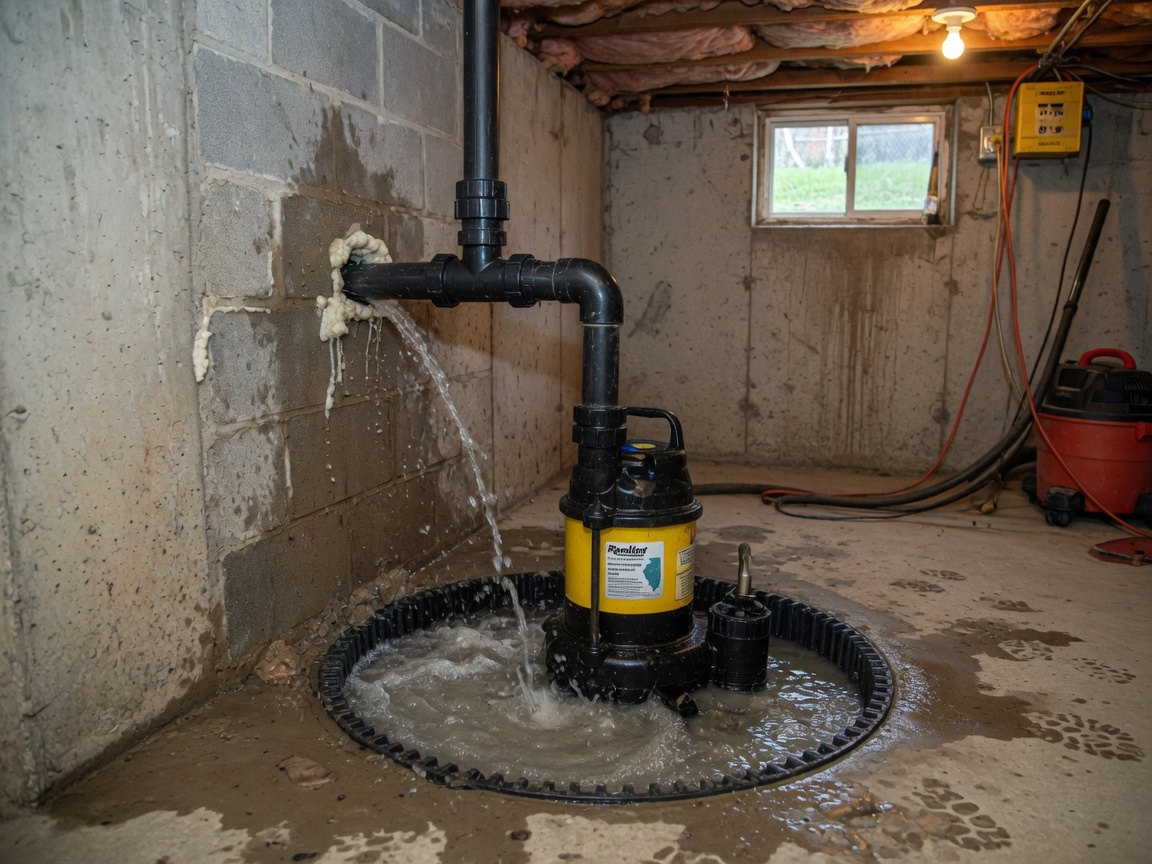
Signal Hill sits on the higher ground of Rockford's east side, and elevation works in its favour. Groundwater pressure here is generally lower than on the river flats or in the Keith Creek catchment, and the basements take on water less aggressively. That does not mean pumps are unnecessary, but it does change the nature of the work: these are mostly maintenance and replacement calls on systems that have quietly done their job for years rather than emergency callouts during a rise.
The housing is largely mid-century, built from the 1950s through the 1970s off Alpine Road and Guilford Road, with a high proportion of finished basements. That finishing is the main thing that shapes our approach. An open pit in a finished room vents humidity and radon continuously, so sealed lids are worth fitting here, and a failure that would be a nuisance in an unfinished basement means damaged flooring and drywall in these homes. Owners in 61107 ask us about backups more than anywhere else in the city, and in a finished basement the case for one is straightforward.
What we do find on this side is discharge lines that have aged out. Many were laid when the houses were built and are now fifty or sixty years old, and the original runs are often shallow by current practice and plug with ice through a cold January. Because the water pressure is moderate here, a frozen line does not immediately flood the basement, which means it can go unnoticed until the pump has been cycling against a closed pipe for days and the motor has paid for it. That is why we press the autumn inspection on Signal Hill homes specifically.
Around Signal Hill
We regularly work near:
- 📍East State Street
- 📍Alpine Road
- 📍Guilford Road
- 📍Spring Creek Road
Sump Pump Repair in Signal Hill — Local Notes
- •Higher east side elevation means lower groundwater pressure than the river flats, so most 61107 work is maintenance and replacement rather than emergency callouts.
- •A high proportion of finished basements makes sealed pit lids worthwhile, since an open pit vents humidity and radon into living space.
- •Original 1950s to 1970s discharge runs are shallow by current practice and plug with ice during sustained cold.
- •Moderate inflow means a frozen line does not flood immediately, so pumps here often run against a closed pipe for days before anyone notices.